Sunday, February 7, 2010

ESSAY: Anna Redwine – Frauenau Paintings

ANNE REDWINE: Frauenau Paintings By Wim Roefs

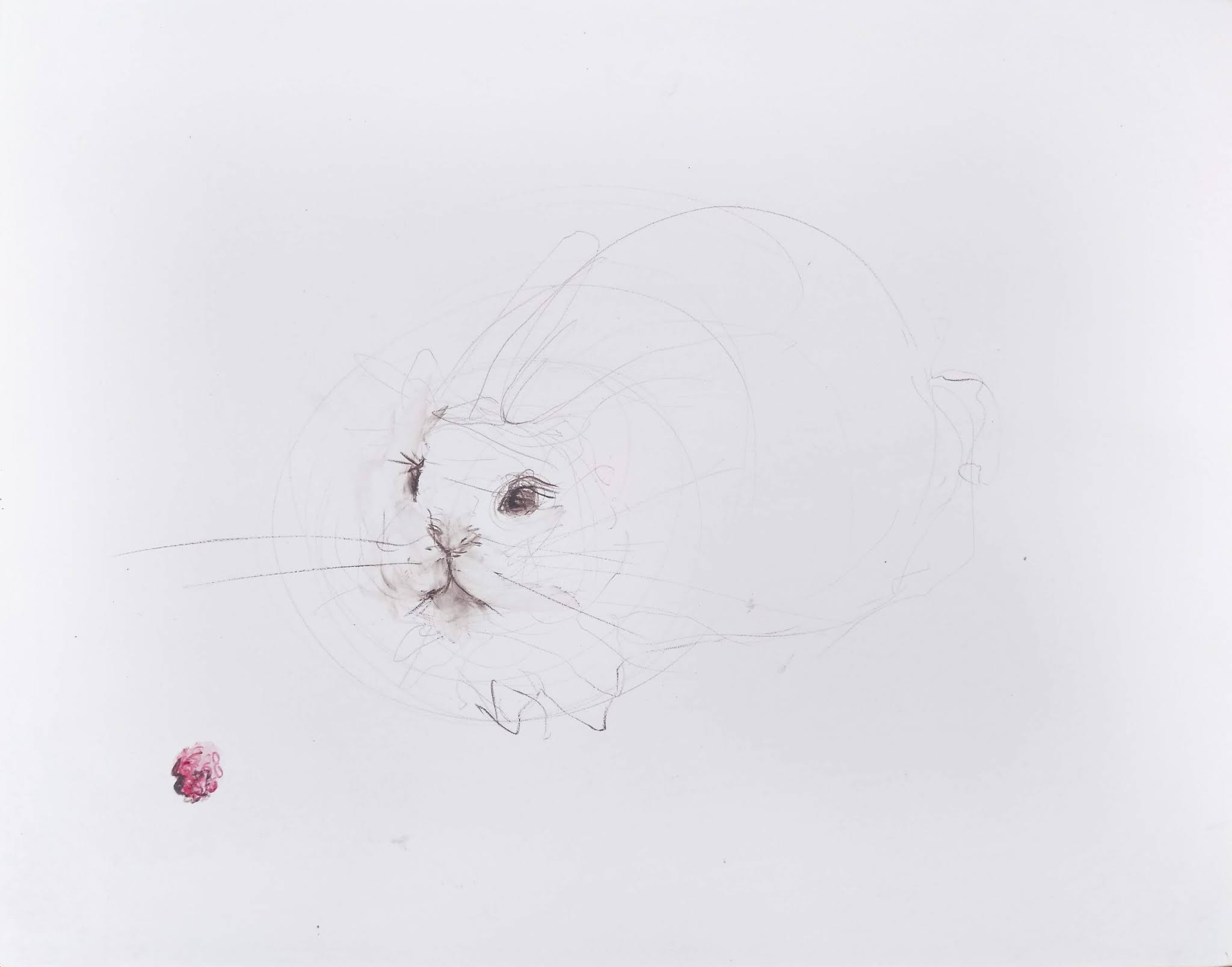
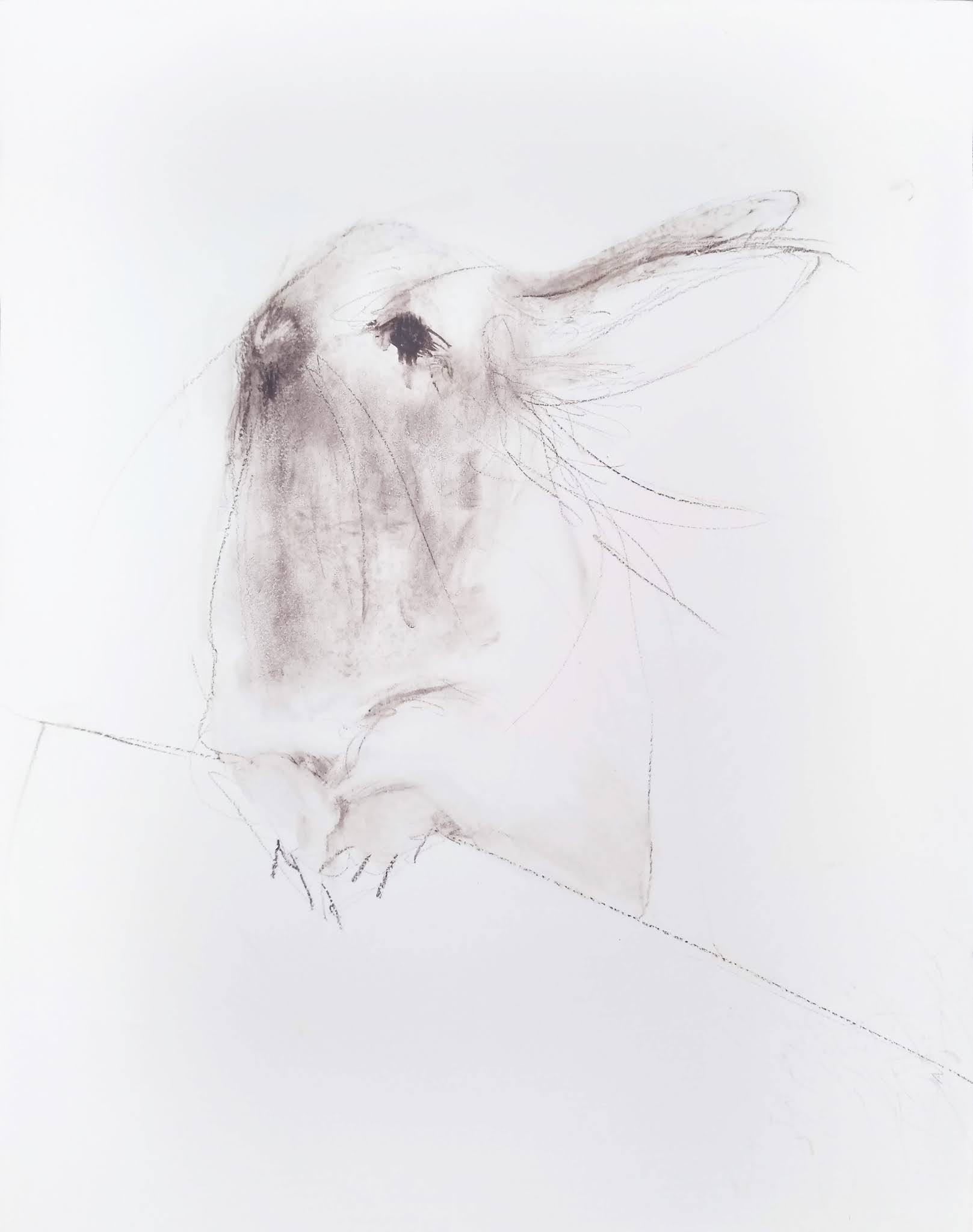
Anna Redwine created 26 works on paper in one week in the summer of 2004. She had been confined to a room on an old farm in Frauenau, a German town near the Czech border, midway between Munich and Prague. It rained for days. She didn’t speak German. She ran out of sketchbook pages to write in and book chapters to re-read. There was nowhere to go but the sheets of primed paper, 24 x 17 inches in size.

To reach those sheets in the Bavarian forest, Redwine had traveled from Columbia, S.C., where she lives, by planes, trains, cars and eventually on foot. She was in pursuit that summer of German Expressionists of the early 20th century, visiting museums in Munich and Vienna. But for one week at the international art workshop Bild-Werk in Frauenau, instructed by Czech painter Pavel Rouchka, Redwine was to paint.

She was surrounded by the unfamiliar, including the German diet and art supplies. Freed from language, she was left with visual clues and communication. The long, solitary trip had exhilarated her. “I was drawing on memories of other intensely experienced places and situations,” Redwine says. “Memories that were not clear like snapshots but potent aggregates of temperature, smell and light.” A look out of the window, or the sun acting just so, could trigger a memory that Redwine explored with watercolor crayons on her sheets.

My work is informed by the experience of life, both mine and that of plants, animals and other people. I define my creative action as drawing, whether I'm using a paintbrush, carbon stick or other tool. In my work the word 'draw' means not only to place marks on a surface but to extract, like to draw blood or a conclusion.”

She discussed with Rouchka different versions of white and their relation to the white of the paper, which made her aware of the importance of what’s left out of a drawing. And so Redwine created inspired, lively, direct works on paper – some non-representational, others less so. The confidence in economy gained in Frauenau led to her 2006 MFA thesis exhibition, Life In One Breath, for which she created small carbon renderings of insects, birds and other animals on large, white panels.

“Frauenau was a turning point in my mark making,” Redwine says. “I really started to understand the strength and nimbleness of white and began to have confidence in manipulating the dialogue between space and form within an image.”

Wim Roefs, February 2010

Friday, February 5, 2010

Anna Redwine: Frauenau Series


Orange Mark, 2004
Watercolor crayon and gesso on paper
24 x 17 in.
$ 850


Five, 2004
Watercolor crayon and gesso on paper
24 x 17 in.
$ 850


Waiting, 2004
Watercolor crayon and gesso on paper
24 x 17 in.
$ 850


Yellow Fan, 2004
Watercolor crayon and gesso on paper
24 x 17 in.
$ 850


Words, 2004
Watercolor crayon and gesso on paper
24 x 17 in.
$ 850


Turquoise Humps, 2004
Watercolor crayon and gesso on paper
24 x 17 in.
$ 850


Tall, 2004
Watercolor crayon and gesso on paper
24 x 17 in.
$ 850


Spy, 2004
Watercolor crayon and gesso on paper
24 x 17 in.
$ 850


Red Place, 2004
Watercolor crayon and gesso on paper
24 x 17 in.
$ 850


Predator, 2004
Watercolor crayon and gesso on paper
24 x 17 in.
$ 850


Mr. Umbrella, 2004
Watercolor crayon and gesso on paper
24 x 17 in.
$ 850


Mosquito Bird, 2004
Watercolor crayon and gesso on paper
24 x 17 in.
$ 850


Monk, 2004
Watercolor crayon and gesso on paper
24 x 17 in.
$ 850


Lily, 2004
Watercolor crayon and gesso on paper
24 x 17 in.
$ 850


Junkboat, 2004
Watercolor crayon and gesso on paper
24 x 17 in.
$ 850


Humps, 2004
Watercolor crayon and gesso on paper
24 x 17 in.
$ 850


Glacier, 2004
Watercolor crayon and gesso on paper
24 x 17 in.
$ 850


Ginrig, 2004
Watercolor crayon and gesso on paper
24 x 17 in.
$ 850


Frog, 2004
Watercolor crayon and gesso on paper
24 x 17 in.
$ 850


Fishpond, 2004
Watercolor crayon and gesso on paper
24 x 17 in.
$ 850


Bird Dive, 2004
Watercolor crayon and gesso on paper
24 x 17 in.
$ 850


Ed, 2004
Watercolor crayon and gesso on paper
24 x 17 in.
$ 850


Action, 2004
Watercolor crayon and gesso on paper
24 x 17 in.
$ 850


Sunday, November 30, 2008

if ARTwalk: Salon I & II: December 11- 24, 2008

For exhibition installation images, click here.


THE SALON I & II
Dec. 11 – 24, 2008
an exhibition at two Columbia, SC, locations:
Gallery 80808/Vista Studios
808 Lady Street
&
if ART Gallery
1223 Lincoln Street

Reception and ifART Walk: Thursday, Dec. 11, 5 – 10 p.m.
at and between both locations
Opening Hours:
Weekdays, 11 a.m. – 7 p.m.
Saturday, 11 a.m. – 5 p.m.
Sunday, 1 – 5 p.m.
& by appointment
Open Christmas Eve until 7 p.m.

For more information, contact Wim Roefs at if ART:
(803) 255-0068/ (803) 238-2351 – if-art-gallery@sc.twcbc.com

For its December 2008 exhibition, if ART Gallery presents The Salon I & II, an exhibition at two Columbia, SC, locations: if ART Gallery and Gallery 80808/Vista Studios. On Thursday, December 11, 2008, 5 – 10 p.m., if ART will hold opening receptions at both locations. The ifART Walk will be on Lady and Lincoln Streets, between both locations, which are around the corner from each other.

The exhibitions will present art by if ART Gallery artists, installed salon-style at both Gallery 80808 and if ART. Artists in the exhibitions include two new additions to if ART Gallery, Columbia ceramic artist Renee Rouillier and the prominent African-American collage and mixed-media artist Sam Middleton, an 81-year-old expatriate who has lived in the Netherlands since the early 1960s.

Other artists in the exhibition include Karel Appel, Aaron Baldwin, Jeri Burdick, Carl Blair, Lynn Chadwick, Steven Chapp, Stephen Chesley, Corneille, Jeff Donovan, Jacques Doucet, Phil Garrett, Herbert Gentry, Tonya Gregg, Jerry Harris, Bill Jackson, Sjaak Korsten, Peter Lenzo, Sam Middleton, Eric Miller, Dorothy Netherland, Marcelo Novo, Matt Overend, Anna Redwine, Paul Reed, Edward Rice, Silvia Rudolf, Kees Salentijn, Laura Spong, Tom Stanley, Christine Tedesco, Brown Thornton, Leo Twiggs, Bram van Velde, Katie Walker, Mike Williams, David Yaghjian, Paul Yanko and Don Zurlo.

Wednesday, September 10, 2008

Biography: Anna Redwine

April Beetle, 2007
Carbon on primed panel
24 x 37 in.
$ 825

Anna Redwine (b. 1978)

Columbia resident Anna Redwine, a native of New Orleans, earlier this year was included in Essence of Asia: Eastern Influences in Western Art at the Asian Fusion Gallery of New York’s Asian Cultural Center. In 2006, her exhibition Life In One Breath, an if ART production, was at Vista Studios/Gallery 80808. Redwine in 2000 received a BA in English from the University of Mississippi. In 2006, she received her MFA from the University of South Carolina in Columbia, S.C 

Tuesday, September 9, 2008

Essay: Anna Redwine

April Turtle, 2007
Carbon on primed panel
24 x 37 in.
$ 825

ANNA REDWINE – Life In One Breath
By Wim Roefs

Anna Redwine’s young career has been a balancing act between drawing and painting. In her 2001-2003 series of self-portraits on panel, the black-and-white grease pencil drawings are streaky and painterly while the colored oil and pencil works rely as much on finely drawn lines as on color. A series of mostly non-representational works on paper, painted in the Bavarian town of Frauenau in 2004, retain despite their painterly qualities a strong sense of draftsmanship. 

Her current animal renderings look and feel at once like drawings and paintings. The carbon renderings of the insects, birds and other animals are drawings, but the surface they’re on suggests that Redwine wanted to take them beyond a life as a drawing. The support consists of birch panels covered with layer upon thin layer of rabbit-skin glue mixed with powdered marble, “woven” with a brush alternately in opposing directions to increase the structural soundness of the surface. After she applied these layers of traditional gesso, Redwine sanded the surface until it was porcelain smooth and ready to draw on. 

The particular whiteness of her surface emphasizes space in ways that acrylic gesso or bleached paper might not. The stretcher behind the panels, which pushes the pieces off the wall, does so, too. The stretchers also give the artworks more heft than most would associate with a drawing. “Having such a substantial surface and structure legitimizes the economy of the drawings, which are deliberately sparse,” Redwine says. “When I drew them on paper, they were interpreted as little sketches or preliminary drawings.” 

“For me, in my work, there isn’t a great difference between drawing and painting. Color is important to me in its ability to function as a visceral metaphor and to describe a place or memory or something not altogether with me at the time. But when I draw from life, color seems almost silly to me, contrived even. I draw because it’s raw, because drawings allow the viewer to have the same experience that the artist has. I am always concerned with life, and I believe in the life of a drawing.”

“When I labor over a painting, the thrill of it, the life, is gone. Drawing is raw and honest and risky and exposed. Even when I erase or redraw a line, the evidence of the entire life of the creation is there. To me, the process is the art, and the end product its result.”

Redwine took the immediacy of drawing up a notch with her animal drawings. After painstakingly preparing the panels, after drawing animals from life, outdoors, in her sketchbooks for months to prepare, and after observing her eventual subjects sometimes for hours, even days, the final drawings on panel were done in a minute or two or just seconds. 

The lizard moved around. A bug on the “wrong” side of a leaf kept her waiting. The mosquito bit her left arm as she drew it with her right, rather large, at the top of the panel, to indicate its proximity. The drawings in most cases only take up a fraction of the 48” x 24” panels, leaving vast areas of crucial negative space. By deliberately placing her renderings just so, mostly off-center, Redwine activated the space in a way that conveys how the animals inhabited the area around them when she drew them. 

“When the animal leaves, the drawing is over,” Redwine says. “If the animal moves, so do the marks I make. In East Asian calligraphy, this approach of creating an artwork in one sitting, never to work back into it, is referred to as painting in ‘one breath.’” 

“In this body of work I use the verb ‘to draw’ to mean not only to place marks on a surface but also ‘to extract’ or ‘distill.’ I extract the essence of the animals. I channel their life as I observe them. During the best drawing experiences, I feel in my own joints the way their bodies move and I am able to predict decisions they make as they interact with their environment. At these times I view the animal with empathy as another living thing. When I was in Costa Rica, I was taught the phrase, sort of a national motto, ‘¡pura vida!’ Pure life. That’s my ambition in art.”

Monday, September 8, 2008

Essay: Anna Redwine

April Nesting Wasp, 2007
Carbon on primed panel
13 x 24 in.
$ 600

ANNA REDWINE – NEW
by Wim Roefs

Anna Redwine’s current show is the latest installment of a body of “animal art” that includes Life In One Breath, her if ART exhibition in March 2006 at Vista Studios/Gallery 80808. The works then and now are two-dimensional renderings of small animals – insects, birds, fish – set against a white expanse. They amount to drawings with the presence of paintings. 

Redwine draws them from life, hauling prepared panels into the outdoors, looking for creatures that crawl, fly, swim or just hang around. The work in the current show she created in April during a residency at Paris Mountain State Park, just outside of Greenville, S.C.

“I draw life,” Redwine says. “I use the word ‘draw’ to mean ‘extract’, like ‘to draw blood’ or ‘draw a breath’. I distill the life of the subject through mark making. Because in this endeavor my most honest marks are the first ones, the drawings on these panels are collections of only the raw, initial renderings of life.”

“Each panel contains only one individual animal, drawn several times. One beetle, one spider, one bird. These drawings are not pictures of the physical structure of animals – rather, they are documents of a focused experience of empathy with another living thing.”

The rawness and honesty of Redwine’s marks might be enhanced by the smallness of her subjects. Their size and scale is far removed from Redwine’s, making her experience with the critters fresher and newer than would be the case with, say, cows or horses. Ideally, the critters are unaware of Redwine’s presence when she draws them, creating a shared experience that goes one way rather than being mutual. 

The large amount of negative space in the works – the unpolluted white space – further emphasizes Redwine’s marks and, therefore, the subjects’ activities and life. For one, of course, the marks in black and shades of gray, and the animal life that appears from them, stand out against all the white. But also, the white space indicates where Redwine could have gone and what she could have done but didn’t. This increases the focus on what she did do.

Rendering one animal several times is one of the differences between the current work and that in Life In One Breath. So is the horizontal orientation of the panels. The single renderings on a vertical plane in the earlier show added a portraiture quality to the work, even though those, too, were about the animals’ lives more than their looks. 

The multiple renderings in the current work give the viewer additional looks into the subjects’ life – each rendering literally and figuratively adding life. With the horizontal orientation of the panels, this repetition takes the imagery away from portraiture, with its quiet quality, and from merely looking at the subjects. Instead, there’s a suggestion of habitat, of life in action in a specific place and of sharing that space. That the horizontal format may trigger associations with the landscape increases the feeling of being in another place – a place shared with the animals.

Sunday, September 7, 2008

Artist Statement: Anna Redwine

April Small Spider, 2007
Carbon on primed panel
24 x 37 in.
$ 825

I draw life. I use the word draw to mean extract, like to draw
blood or draw a breath. During each drawing experience, I attempt to
surrender self while I distill the life of the subject through
mark-making. Because in this endeavor my most honest marks are the
first ones, the drawings on these panels are collections of only the
raw, initial renderings of life. Each panel contains only one individual animal,
drawn several times. One beetle, one spider, one bird. These
drawings are not pictures of the physical structure of the animals,
rather they are documents of a focused experience of empathy with
another living thing.